
The fastest digital interface between authorities and the real estate industry

















Transaction-relevant authority information – up to two weeks faster.
More time for your core business.
One platform. Over 15,000 interfaces.
Dependable data – from official and verified sources.
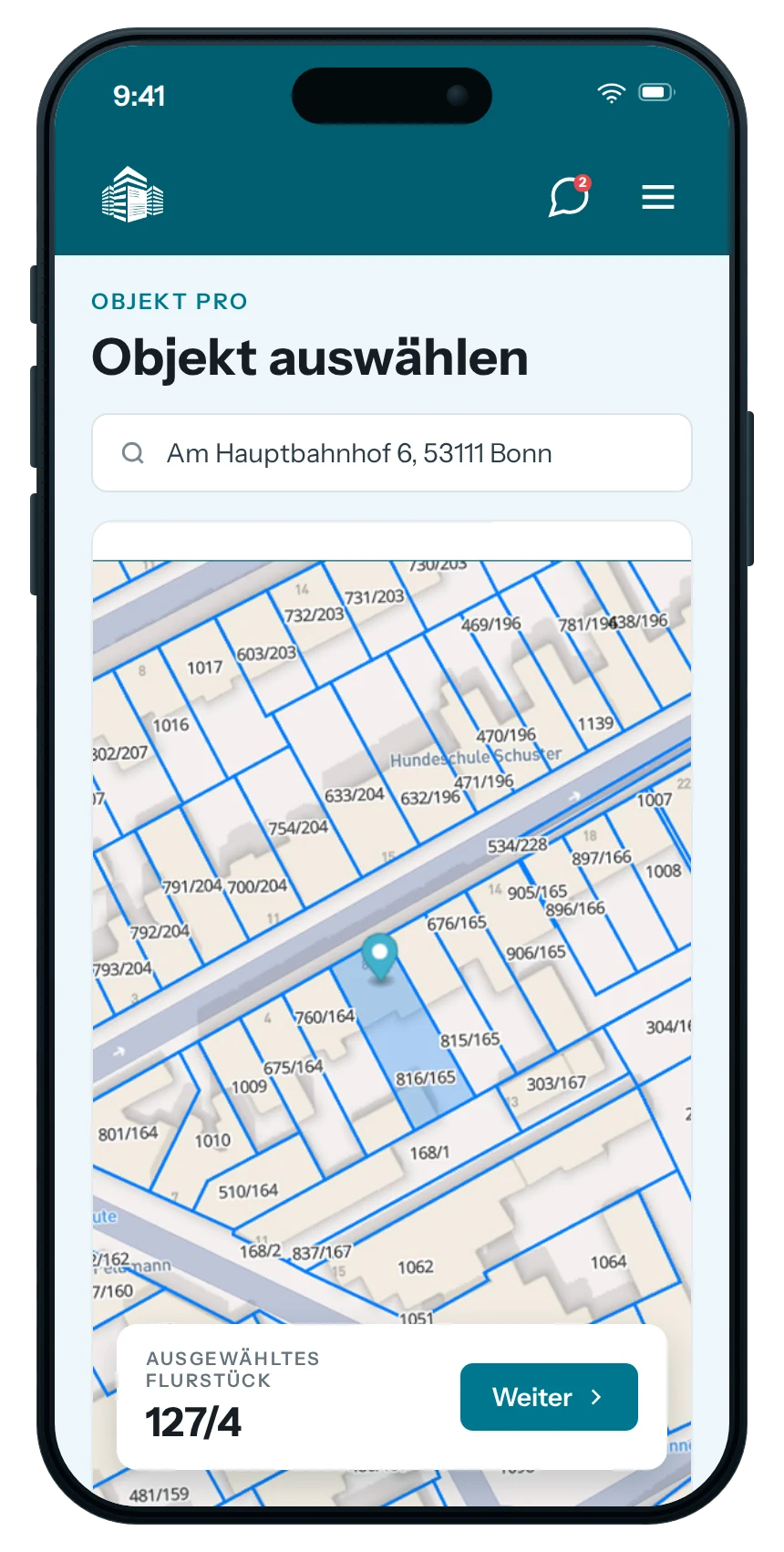
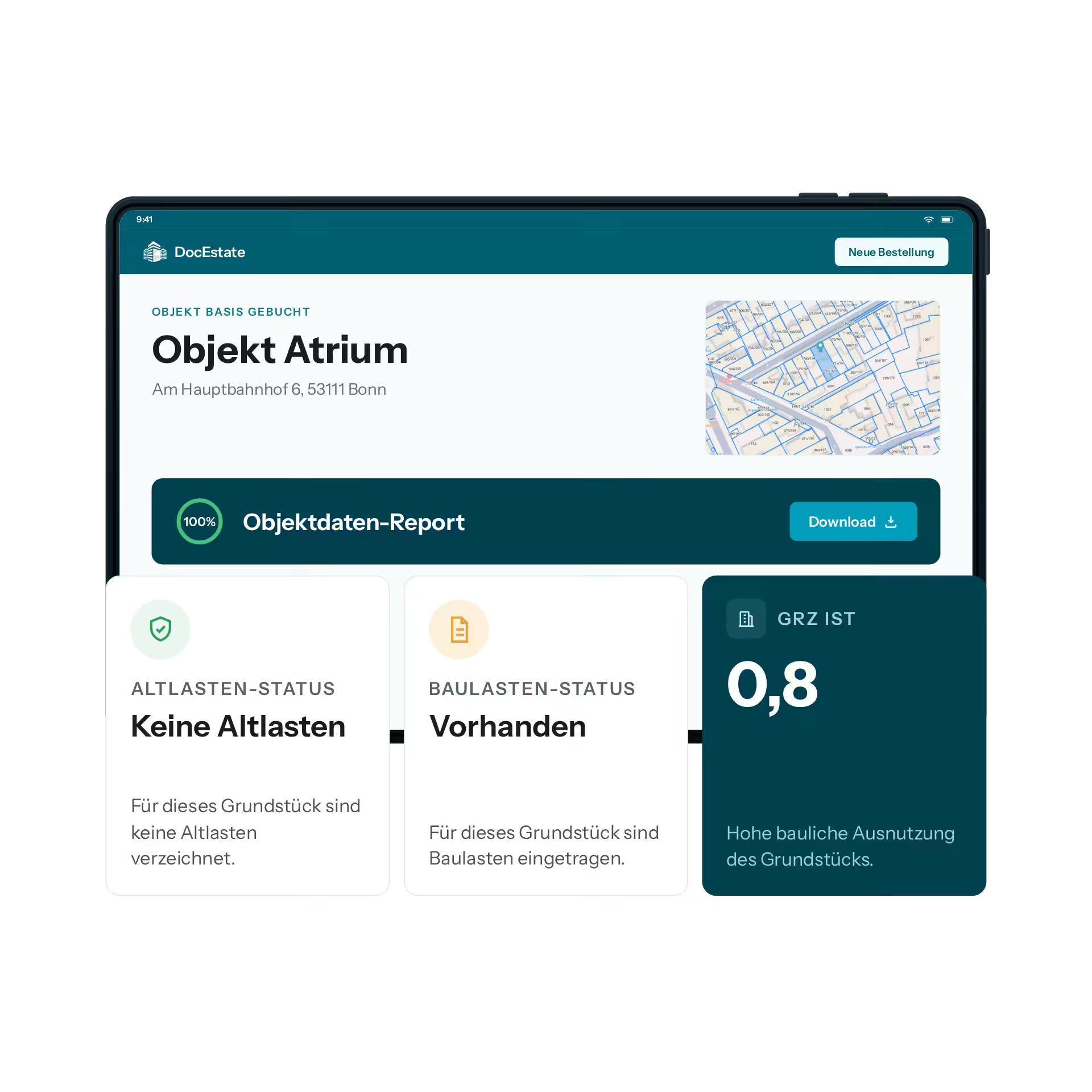
How it works
- Enterprise clients can share their securely stored documents with clients and team members
- Dedicated account manager
- Flexible billing
- Find many more benefits here
DocEstate services
Enterprise
For all asset classes
Enterprise includes:
Property Pro
Primarily for residential real estate
Property Pro includes:
Property Plus
Primarily for residential real estate
Property Plus includes:
Property Basic
Primarily for residential real estate
Property Basic includes:
What our clients say
DocEstate is an intuitive platform for managing authority information across our real estate portfolios. It supports us throughout the entire lifecycle, particularly in asset management and transaction processes. The platform reduces our administrative workload and delivers documents quickly and in a structured way. With DocEstate, we benefit from improved transparency, automated data provision and efficient document management.

As an asset manager operating across Germany, digital authority processes add real value to our day-to-day work. The DocEstate platform not only fits seamlessly into our digitalization strategy — it is also ideally suited to complex fund structures, from ordering through billing to support. This has allowed us to noticeably accelerate key processes.

What excites me about DocEstate is that it solves a real, long-standing problem — one that has occupied our industry for years and keeps challenging it anew. That such a simple and effective solution exists is exceptional in our industry.

Our mission is to take the pressure off brokers and give them solutions that genuinely make their everyday work easier. In DocEstate, we have found a partner that enables exactly that — fast, reliable and practical.

What the industry says




FAQs
What are official authority disclosures for real estate?
Official authority disclosures fall into six categories:
- Permit documents: e.g. building permits for the original construction, later structural changes such as an added story or an extension. Changes of use also require building-law approval. Key documents include building permits, permit decisions, floor area calculations, building descriptions, and plans such as floor plans, elevations, sections, and site plans.
- Encumbrances and restrictions: e.g. contaminated sites, building encumbrances, historic preservation status, unexploded ordnance records
- Neighbor contributions: e.g. the contribution certificate covering development levies and sewer connection fees, or municipal charges — see the development contribution certificate
- Geo and cadastral data: e.g. cadastral map, land registry map, property records
- Tax information: e.g. property tax assessment, tax clearance certificate
- Planning-law disclosures: e.g. development plan (B-Plan), land use plan (FNP), conservation area statutes and further ordinances under the German Building Code (BauGB)
Why are official authority disclosures important when buying property?
At the same time, official authority disclosures can reveal value-enhancing potential: development plans and planning-law disclosures, for example, show whether further densification or additional construction is possible — which directly affects a property’s market value.
What risks arise from buying property without official authority disclosures?
Banks also respond to missing documentation: they often demand additional collateral or reduce the loan-to-value ratio, making financing more expensive or causing it to fall through. On top of that, value-enhancing development potential can go unnoticed if planning-law information is missing.
Why is obtaining official authority disclosures so time-consuming?
These include building authorities, cadastral offices, and environmental agencies, among others. Each authority has its own responsibilities, submission requirements (e.g. email, form, or postal mail), and processing times.
In some cases, an in-person review is required, for instance of building or land files, adding further effort.
Once a request is submitted, processing status is often opaque, creating extra coordination and follow-up work. At the same time, errors — such as inaccurate property data — can cause delays or require resubmission.
On top of that, many disclosures come with separate fee notices that must be paid on time and booked internally. Altogether, this creates a complex, time-intensive, and error-prone process that is difficult to manage efficiently without central coordination.
How can official authority disclosures be obtained more efficiently?
DocEstate acts as the digital interface between the real estate industry and public authorities, handling the entire coordination process. All relevant disclosures are procured in bulk, authority fees are settled centrally, and results are delivered in a structured format. In addition, the information from these disclosures is cross-checked against further data in a combined analysis. This significantly reduces internal effort and speeds up downstream processes such as transactions, valuations, or financing.
Why request official authority disclosures through DocEstate?
Instead of submitting numerous individual requests to different authorities, all disclosures are procured in bulk through DocEstate. Authority fees are settled centrally, resulting in a single invoice. DocEstate also systematically evaluates the results, supplements them with data from further sources, and presents opportunities and risks in a clearly structured report — providing a well-founded basis for decisions on acquisitions, development, or financing.
How do I receive official authority disclosures and analyses from DocEstate?
For full process automation, disclosures can be transferred directly into your own software systems via the DocEstate API. Seamless integration into existing platforms such as data rooms, CRM systems, or valuation tools has already been implemented for leading providers including OnOffice, Backbone, and Empro.
How much time can I save with DocEstate on official authority disclosures?
Since transactions, financing, and development projects often depend on the availability of official information, DocEstate measurably speeds up the entire process and enables faster deal closings.
Who is DocEstate suitable for — who uses the service?
- Real estate investors and asset managers: for due diligence and acquisition reviews
- Real estate agents: for sales documentation and client materials
- Banks and lending institutions: for loan-to-value assessments and financing approvals
- Notaries and attorneys: for drafting purchase contracts and transferring ownership
- Appraisers and surveyors: for market value appraisals under ImmoWertV
- Developers and project builders: for planning law and permit documentation
What is the difference between a contaminated site disclosure and the contaminated sites register?
Contaminated sites can significantly reduce a property’s value and may trigger remediation obligations under the German Federal Soil Protection Act (BBodSchG). Banks frequently require a current contaminated site disclosure for property financing. A legitimate interest must be demonstrated to request one. Contaminated site disclosures are regularly factored into DocEstate’s analyses.
What is a building encumbrance disclosure and when is it needed?
A building encumbrance disclosure is needed when buying property, when financing through a bank, and during building permit procedures. Typical encumbrances include setback area encumbrances, access-way encumbrances, or obligations to keep certain areas of a property clear. Processing time ranges from 1 to 8 weeks depending on the authority.